Rehabilitación del Patrimonio Ecológico y Social del Humedal Juan Amarillo


Abstract
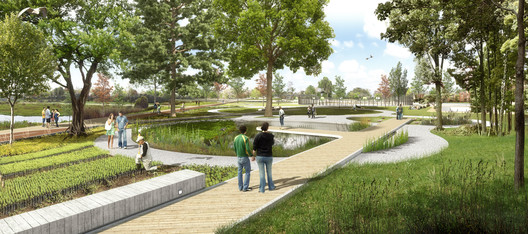
El plan de “Rehabilitación del patrimonio ecológico y social del humedal juan amarillo”, se
piensa con el fin de conformar la conservación y debida protección del humedal, recuperando
y proporcionando el borde natural original, para así generar una dialéctica entre el borde natural
y el urbano, dando una mayor importancia al tratamiento paisajístico/nativo que une estos dos
ecosistemas.
El proyecto surge a partir de la problemática ambiental del mundo en su actualidad, que gran
parte es el resultado de la explotación y el manejo desmesurado de los recursos naturales, en
varios casos debido al desconocimiento de los procesos ecológicos, que ocurren en los
ecosistemas primarios. En un ámbito mundial, esta crisis se logra tomar medidas efectivas, para
evitar la desaparición de los ecosistemas, debido a que son regulados y protegidos por entes
gubernamentales, no gubernamentales y tratados ambientales, que promueven su conservación
y recuperación tanto parcial como total y su posible uso sostenible.
Colombia al pasar el tiempo se convertirá en una zona mucho más lluviosa y contaminada, y
los efectos del agua se harán aún más intensos, si no hay zonas blandas, control de desechos y
“oasis” amortiguadores como lo son los humedales; con base en esta premisa se parte de la
inquietud del tratamiento que se le ha dado a los parques naturales y humedales en Colombia,
más específicamente en la capital, donde es preocupante el cuidado de humedales, ya que han
perdido o hasta desaparecido muchos de ellos con el tiempo, debido a esto nos enfocamos en
su humedal más grande, el cual es el humedal Juan Amarillo, para poder generar una
concientización ambiental, a través de estrategias de recomposición natural, paisajística y
urbana, donde lo principal es la revitalización del borde del humedal.
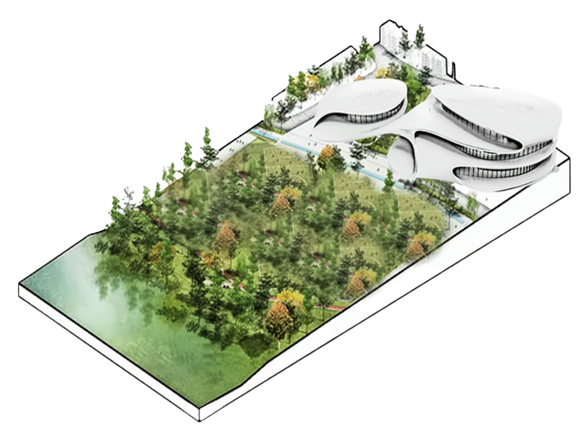
El resultado final de este proyecto es la revitalización de la UPZ 71- Tibabuyes de la localidad
de Suba, en el tercio bajo del humedal Juan Amarillo por medio de un equipamiento de
investigación y recreación ecológica, el cual generara interacciones sistémicas a nivel
paisajístico, arquitectónico, urbano, social, cultural, y ambiental; concientizando el proceso he
impacto de urbanización y deforestación, perjudicial hacia el entorno del humedal. The plan of "Rehabilitation of the ecological and social heritage of the juan amarillo wetland",
is thought in order to shape the conservation and due protection of the wetland, recovering and
providing the original natural edge, in order to generate a dialectic between the natural and
urban edge, giving greater importance to the landscape/native treatment that unites these two
ecosystems.
The project arises from the environmental problems of the world today, which is largely the
result of the exploitation and excessive management of natural resources, in several cases due
to ignorance of ecological processes, which occur in primary ecosystems. At a global level,
this crisis is possible to take effective measures to prevent the disappearance of ecosystems,
because they are regulated and protected by governmental, non-governmental entities and
environmental treaties, which promote their conservation and recovery both partial and total
and their possible sustainable use.
Colombia over time will become a much rainier and polluted area, and the effects of water will
become even more intense, if there are no soft areas, waste control and buffer "oases" such as
wetlands; based on this premise is based on the concern of the treatment that has been given to
natural parks and wetlands in Colombia, more specifically in the capital, where the care of
wetlands is worrying, since they have lost or even disappeared many of them over time, due to
this we focus on its largest wetland, which is the Juan Amarillo wetland, in order to generate
environmental awareness, through natural, landscape and urban recomposition strategies,
where the main thing is the revitalization of the edge of the wetland.
The final result of this project is the revitalization of the UPZ 71- Tibabuyes of the town of
Suba, in the lower third of the Juan Amarillo wetland through an ecological research and
recreation equipment, which will generate systemic interactions at the landscape, architectural,
urban, social, cultural, and environmental level; raising awareness of the process has impact of
urbanization and deforestation, harmful to the wetland environment.
Collections
- Arquitectura [2564]
The following license files are associated with this item:

Except where otherwise noted, this item's license is described as Reconocimiento 2.5 Colombia